

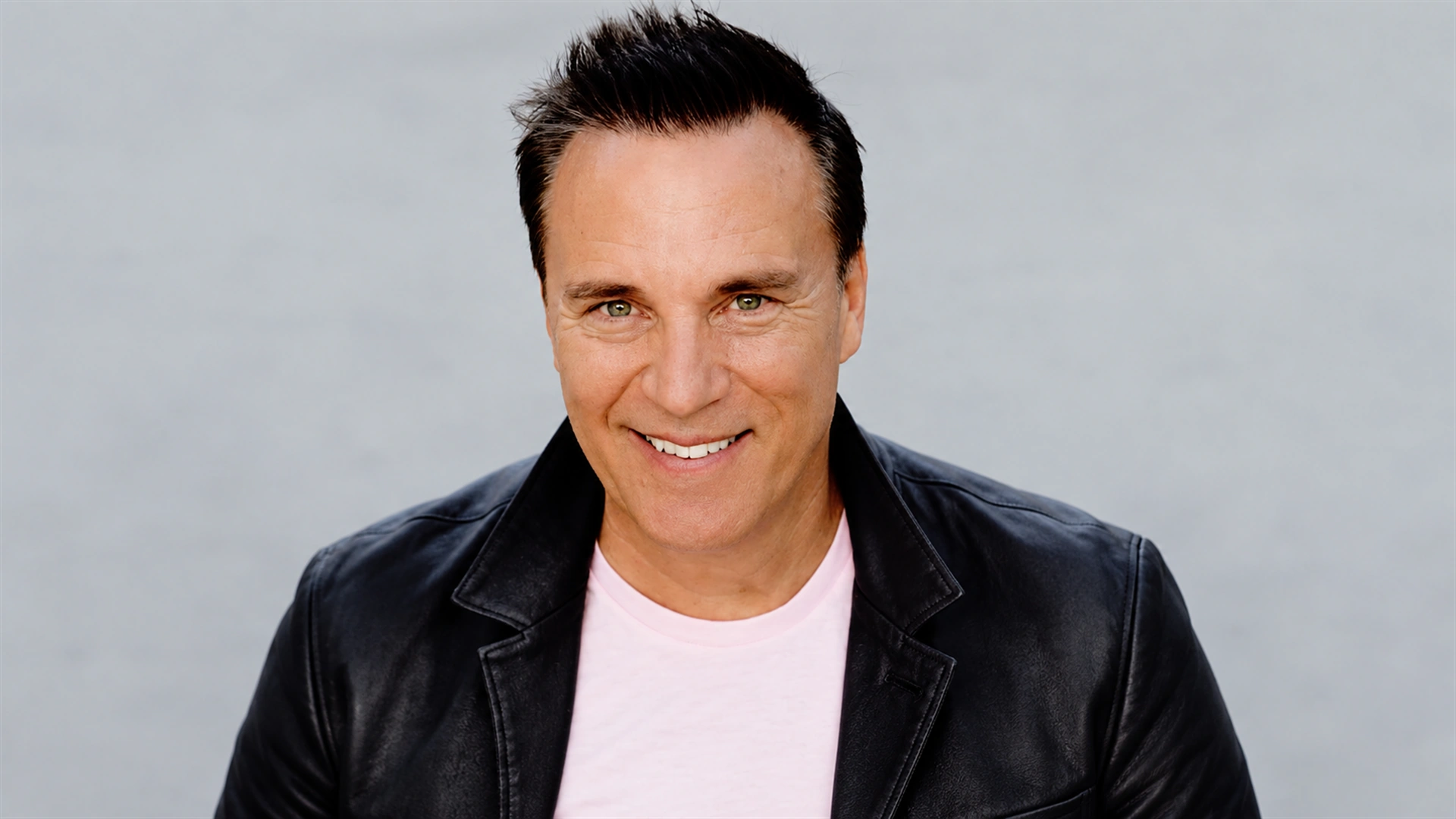
Craig Shoemaker got sober on November 20, 1987. Since then he has built a comedy career, a foundation and an app around one stubborn idea: recovery doesn’t have to be grim.
Connect with Craig Shoemaker
Craig Shoemaker started drinking at 12 or 13. He grew up in Philadelphia with no father and a mother who worked too much to be home. By the time he hit bottom he had tried most of what was on offer, and a few things that weren’t, technically, drugs.
Nearly four decades later he has two Emmys, a Comedian of the Year trophy, a stack of producing credits and kids he coached through every sport they played. He also has a theory about why he made it.
“Laughter started as my profession,” he says. “It eventually became part of my purpose.” Then, because he can’t help himself: “Or, as I say, my sole porpoise.”
His last name is Shoemaker. He would like you to appreciate the spelling.
The Jamaican Tasting Menu
Alcohol came first. Acid, cocaine and pot followed, along with at least one attempt to snort lint off a carpet.
The low point of the using years, at least the one he tells on stage, happened in Jamaica. He overdosed on Red Stripe beer, ganja cake, mushrooms, meth and more ganja.
“Apparently,” he says, “I was going for the Jamaican tasting menu.”
His actual bottom was quieter than that. There was no single movie scene. Consequences piled up until he couldn’t ignore the pattern.
“The common denominator in my problems was me,” he says. “That was painful… and incredibly freeing.”
The last night was, by his standards, routine. He was visiting Philadelphia and found an after-hours bar called The Black Banana. He woke up naked on his sister’s sofa futon, hoping whatever was next to him was human.
“A spring was poking me in the ass,” he says. “A sign that enough is enough.”
That was November 1987. He hasn’t needed a second sign.
“We Are Not a Glum Lot”
Shoemaker went into sobriety assuming it meant giving up the party. What surprised him was how much fun recovery turned out to be.
“I had spent years confusing intoxication with joy,” he says. “There’s a huge difference.”
There’s a line in the Big Book he latched onto early: “We are not a glum lot.” He took it further than most. He started the Laughter Heals Foundation, then a wellness business built on protocols for intentional laughter, and now MyLaffApp.
His daily toolkit is short. Laughter, perspective, gratitude, service and spirituality. Underneath all of it sits one reminder he never lets go of: his worst day sober still beats going back to the person he was when he was using.
Ask what he’d do with an extra million dollars and he doesn’t hesitate. It goes to Laughter Heals, to bring therapeutic laughter and wellness programs to people who are suffering and can’t otherwise get them.
“I’ve seen firsthand what laughter can do,” he says.
The best advice he gives other people fits on a bumper sticker: “Take laughter seriously, not yourself.”
A Philadelphia Guy at His Core
Shoemaker lives in Southern California now, but the accent, the attitude and the sense of humor all came from Philly. So did his inability to quietly accept bullshit.
The soundtrack of his childhood was neighborhood voices, people yelling across the street and sports on the radio. In his telling, everybody had an opinion, and it usually arrived with a scream and a honk of the horn. Go Birds.
His father wasn’t around. His mother raised him alone, with no child support, and worked long hours. Somehow she found money for a woman named Myrtle to watch the kids after school.
Myrtle called him her “white grandson.” When he was seven or eight, she would tell him, “You’re going to Hollywood.”
“For a kid with so much abandonment in his life, she was an incredible source of love and support,” he says.
Mostly, though, he raised himself. He showed up to recovery with what he calls an empty tool chest. The 12 Steps and the people in AA helped him fill it.
“I like to think I’ve used those tools to build a pretty beautiful home of consciousness and enlightenment,” he says. “It’s still under construction.”
These days he describes himself as stuck between “Namaste” and “kiss my ass.” Philly and Southern California, both still fighting it out.
Evading Growth Opportunity
Shoemaker doesn’t pick a side in the disease-or-choice debate. He thinks addiction starts differently for everybody. Once it takes hold, though, he has no patience for the advice addicts usually get.
“‘Just make better choices’ is a pretty useless prescription,” he says. “Recovery gave me responsibility without requiring me to live in shame.”
He has an acronym for the thing that still trips him up. EGO: Evading Growth Opportunity.
His Higher Power is, at minimum, something bigger than that ego. He no longer feels the need to define it precisely. “I just need to remember that I’m not it,” he says. Seven of the 12 Steps mention a Higher Power, which he figures makes it pretty important.
The foundation came early. In his first year sober he found the Agape Spiritual Center, and that’s where the relationship started.
The practice he leans on most is simple. Spiritus, he points out, is a Latin word tied to breath. When he feels the old alcoholic behavior coming on, whether that’s lying, cheating, stealing or just acting out of ego, he takes what he calls a sacred pause and breathes.
“I allow something greater than me to take over,” he says. “It usually leads me to take an action contrary to what I instinctively wanted to do. For me, that is grace.”
Success Measured in Peace
Shoemaker used to keep score with applause and money. Now he asks himself a different set of questions. Am I present? Are my relationships healthy? Am I creating something worthwhile? Am I useful to somebody besides myself?
“The more service I do, the better I feel and the more successful I become,” he says.
These days much of that service happens on set. He’s producing a lot of film and television, which means hiring people, and many of the people he hires are in recovery. “It becomes another way of giving back to the community,” he says.
The compliment that lands hardest isn’t about his comedy. He’s heard “you’re funny” for a living. What gets him is “You helped me.”
Asked for his greatest achievement, he gives a comedian’s answer: staying in the game. Career, sobriety, relationships, failures, reinventions. “I’m still standing up, literally and figuratively,” he says. His podcast and the final comedy special he’s about to shoot are both called Still Standing Up.
Then he gets to the one that matters. His own father was a pretty bad role model, and Shoemaker became a great dad anyway. He showed up for everything and coached his kids in every sport they played.
“I just always hoped the other parents wouldn’t Google my athletic career,” he says.
His two perfect days both happened on a river, whitewater rafting with his family. He still talks about watching his kids, very young at the time, push through their fear on a hard rapid.
The greatest risk he ever took was betting on himself. Comedy made no practical sense as a career, “which is probably why it worked.” Financial advisors have spent years steering him toward investments where he has no say in the outcome. He keeps putting money into ideas he came up with and owns instead.
“Lots of failures, but they’re my failures,” he says. “And when something works, I know why.”
Out of the Despising-People Business
Recovery taught Shoemaker to skip the Victim Olympics. Keep your side of the street clean and go from there. His other slogan is shorter: “Stop global whining.”
He draws a hard line between people and behavior. Cruelty, dishonesty and abuse of power bother him plenty. Handing one person that much room in his head does not.
“That doesn’t sound like recovery,” he says.
What does bother him is watching people from the program spend their days on Facebook arguing about things they’re powerless over. “They drink poison and hope the other person dies,” he says. “I just don’t get it. Trust me, it’s tempting, but I’d rather create my own space, one of joy and laughter.”
His biggest pet peeve is too much texting and not enough actual human connection. He has a story to prove the point.
He was driving to meet someone at his country club and texted, “I’m driving.” The texts kept coming anyway. He finally picked up the phone, which he admits is illegal, and tried to reply. The L sits right next to the K.
The message read: “When I get there, I’m gonna lick your ass.”
“That’s why we should call people,” he says.
The best advice anyone ever gave him: take your own inventory. The worst was anything that started with “You know what everybody thinks you should do…”
In a friend he wants loyalty, honesty and someone who shows up. “I don’t need people to agree with me,” he says. “I need people who will tell me the truth and still be there afterward.” A sense of humor helps. Mostly it’s the sense of humor.
Springsteen, Braveheart and a Horse’s Ass
Shoemaker has seen Bruce Springsteen 17 times. The 1984 tour pretty much shaped his comedy career. Like Bruce, he gets personal, gets self-deprecating, stays rooted in truth and brings it from his heels every show.
“I want to give an audience everything I have,” he says, “for longer than most people probably expected when they bought the ticket.”
The movie he’s watched most is Braveheart. When it was in theaters he took dates to see it, and the test was simple. If she didn’t like Braveheart, there was no second date.
He could name Spielberg or Scorsese as his favorite director. He goes with Clint Eastwood instead, for the depth of his films. His favorite celebrity in recovery is Anthony Hopkins, whom he’s heard speak many times. The living person he most admires is Tony Robbins, who used to come see him perform in the late ’90s and became a friend. Even so, Shoemaker is clear that he doesn’t deify anyone.
He rarely rereads books because he’s “too busy enjoying all the abundant magnificence of sobriety.” Wayne Dyer audiobooks have gotten him out of a few pickles. Right now he’s reading Let Them by Mel Robbins. Given all the narcissists he’s dealt with, he suspects she installed a nanny cam in his life to write it.
His dream dinner party would seat Pat Conroy, J.D. Salinger (who would take some convincing) and Brené Brown. He’d let Brown do the talking.
A few more quick ones. He’s a Scorpio, born and sober in November, though one woman broke up with him after reading their charts, so he has a little astrology PTSD. His favorite cuisine is Japanese. His ex-wife is from Japan, and he’s not sure what that says about him. Outside Philly, his favorite city is Montreal, where he’s played the comedy festival several times. And he carries a black bag of notebooks everywhere, because his best writing still comes from pen on paper.
Then there’s the trophy.
When fires forced him to evacuate a couple of years ago, he had to decide fast which possessions really mattered. He left the two Emmys behind. He left the Comedian of the Year award and the framed New York Times article about him.
He grabbed the horse’s ass trophy he won at his ex-wife’s family reunion.
“Hey,” he says, “I earned that!”
Fourth Place, On Purpose
For all the stage time, Shoemaker’s biggest fear is dying alone. He’s honest that he needs to get better at being by himself. When he does go looking for solitude, he heads outside: a walk, the golf course, somewhere near the water.
“I’m always about other people,” he says. “If codependence had an Olympics, I would come in fourth on purpose because I wouldn’t want to take a medal away from somebody else.”
If he could wake up tomorrow with one new quality, it would be patience. “I’d like to get it immediately.”
The advice he’d give his younger self is to stop trying so hard to win everyone’s approval. He admits he’s still guilty of it. It happened while he was answering that very question, when he started worrying that using the word “me” too much would make people judge him.
“Most people are too busy worrying about themselves anyway,” he says. “Trust your instincts sooner, forgive faster and don’t confuse attention with love.”
His biggest regret is the times he was in the room but not really there. “Success can be recreated,” he says. “Time with people you love cannot.”
That may be why the thing he loves most about sobriety is plain presence. He has lived through fatherhood, love, heartbreak, success, failure and reinvention without anesthetizing any of it.
If he had to describe himself in one word, it would be resilient. “Sometimes I wish God would stop giving me so many tough tests,” he says.
The most recent lesson is that reinvention doesn’t come with an age limit. He’s still changing his mind, changing direction and turning into somebody he didn’t see coming.
“Nothing takes me down permanently.”
Thirty-eight years after waking up on his sister’s futon, Craig Shoemaker is still standing up.