

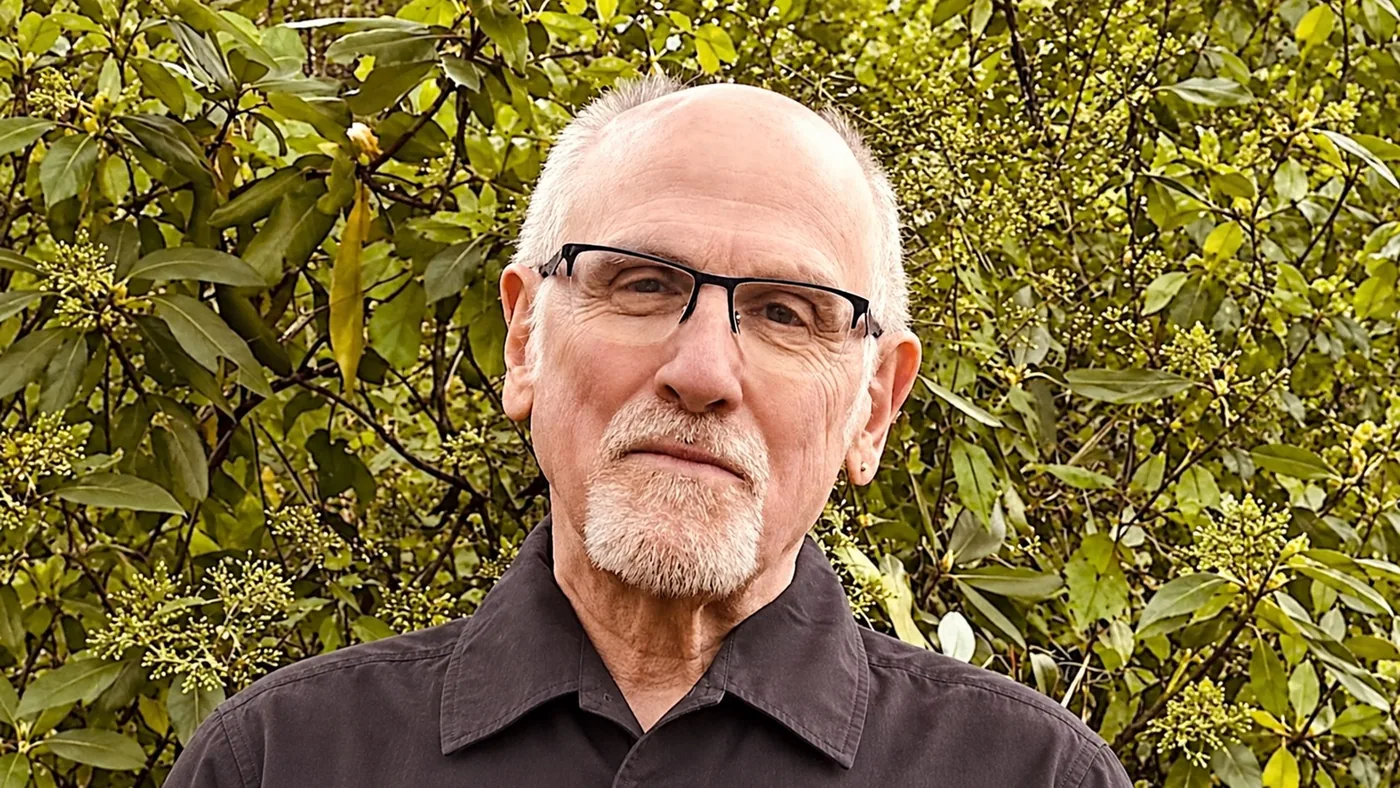
Woody is a musician, counselor, interventionist, and author celebrating 36 years of recovery. From touring with The Del Fuegos to helping individuals and families rebuild their lives, this week’s Addiction/Recovery eBulletin Person of the Week finds purpose in creativity, service, and being present for the people he loves.
Connect with Woody Giessmann
The next day was his son’s second birthday. Woody Giessmann was living in the Hollywood Hills, unable to face himself in the mirror.
He had lost his own father to alcoholism. Now a father himself, he wanted to break that pattern. He wanted to be there for Madison.
So he called Peter C., a fellow musician in Santa Monica, and asked for help.
Peter invited him over. They sat at the kitchen table and talked. Peter knew Woody had relapsed, and he answered the phone anyway. That willingness to stay connected became part of the foundation of a recovery that began on April 12, 1990.
Peter became his temporary sponsor. Thirty-six years later, Woody says, he still holds the job.
“I am deeply grateful to still have him in my life.”
A Life in Music—and a Growing Need for Help
Woody grew up in Wichita, Kansas, in a home filled with opera, show tunes, and The Beatles. He remembers Keith Richards’ guitar coming through the radio as Mick Jagger sang “Satisfaction.” Music offered a world he wanted to enter.
His early career included the art school band The Embarrassment. After leaving Kansas and arriving in Boston, he joined The Del Fuegos and headed to Los Angeles to record for SLASH/Warner Brothers.
There were shows with ZZ Top and INXS, and roughly 100 opening dates for Tom Petty and the Heartbreakers. For a young musician, those experiences could feel like a dream fulfilled.
But substance use had become entangled with music long before those tours. Woody traces that connection to age 14. On the road, drugs and alcohol were readily available—in dressing rooms, through fans, and after shows. Alongside the extraordinary opportunities, his addiction continued.
The First Meeting: Coffee, Company, and a Reason to Listen
Woody remembers his first 12-step meeting on Rodeo Drive on May 4, 1989. Peter and Peter’s girlfriend sat on either side of him, brought him coffee, and helped him settle in.
When Woody asked what to do, Peter offered simple guidance: say hello, listen, and do not be surprised if someone else tells your story.
Listening was difficult at first. Years of loud music had left Woody with tinnitus, and his own thoughts competed with the voices in the room. Eventually, he began to hear experiences he recognized.
Other people were describing lives that sounded like his.
His lasting sobriety would begin the following year. But that first meeting introduced him to something he would return to: people who understood, and a place where he could begin by listening.
What Keeps Recovery Alive After 36 Years?
Today, Woody lives in Arlington, Massachusetts. His recovery has familiar, practical rhythms: reflection, meditation, fellowship, and service.
His weekly home group offers an opportunity to practice meditation in the spirit of the 11th Step. He reviews his behavior, considers what he could have done better, and works at admitting when he is wrong.
He also carries advice his father-in-law shared on his wedding day:
“It’s better to say you are sorry than it is to be right.”
For Woody, those words have a place in everyday family life. One of the things he values most about sobriety is being available to his wife, sons, and friends.
At the Piano, in Front of a Canvas, Outside in New England
Creativity remains part of his daily recovery. The benefits of meditation follow him to the piano when he writes a song, or to a painting with a Van Morrison album playing.
Nature is another source of comfort. Woody describes spiritual beliefs shaped by Mother Nature and finds evidence of his higher power in the changing seasons. New England’s autumn colors are among his favorite reminders.
Asked to describe a perfect day, his answer is straightforward:
“Every day is a perfect day when I wake up sober in New England.”
Learning to Give Recovery Away
After returning to Boston and going back to school, Woody met a woman known as “Nurse Trish” at a meeting in Harvard Square. She told him that to hold on to his recovery, he had to learn to give it away.
That lesson became central to his work with individuals and families.
A licensed counselor and board-certified interventionist, Woody describes his approach as invitational. He measures success through the recovery he sees in clients and their families: restored relationships, renewed possibilities, and people who reach back to tell him how their lives have changed.
Some thank him for helping them stay alive. Others tell him their families are healthy again. He also remembers a young man who thanked him while admitting he had lied throughout Woody’s efforts to help him.
Service can be quieter, too. Alongside his computer and a protein bar, Woody sometimes carries clean socks in his briefcase to give to someone living on the streets.
Making Art Out of What He Has Lived
Woody’s creative work continues alongside his counseling practice. His memoir, A Life of Recovery – Breaking the Chains of Addiction, explores his experiences. He is now writing a second book, Addiction & Art, a process he describes as both therapeutic and necessary to his recovery.
His reflections include the loss of his brother, Brian Gilmore Giessmann, to untreated alcoholism, depression, and suicide. After their father’s death, Brian had been like a father to Woody. Their shared love of music helped open their world.
Today, writing gives Woody another way to explore those experiences while continuing the work of his own recovery.
Bringing Rock Bottom to the Stage
Woody is also developing Rock Bottom – A Musical with collaborators including Bad Company co-founder Simon Kirke and comedian and writer Tony V.
He describes the project as a love story about two people in the throes of addiction, with both tragedy and comedy. He hopes bringing it to the stage will help educate audiences and address the stigma surrounding addiction.
Music also creates opportunities to support recovery directly. At a fundraising event, Woody performed with Alice Cooper, sharing the stage for a song he had first heard as a teenager: “School’s Out.”
What stayed with him was Cooper’s generosity—his immediate interest in helping the cause and his offer to auction a round of golf with himself.
“He was truly the most generous person to share a stage with.”
The Life He Wants to Keep Showing Up For
Ask Woody what he would tell his younger self, and he draws on the advice he gives his sons: be true to yourself, surround yourself with good people, and enjoy what you do.
He would also tell himself to stick with the piano lessons.
His humor is intact. He thinks his memoir could make a good film or television series—with one casting preference: Tom Cruise would have to play him.
But when asked to describe himself in a single word, he chooses something simpler:
“Sober.”
That word holds the life he has built since the conversation at Peter’s kitchen table: marriage, fatherhood, friendship, creative work, and decades of helping others.
It also holds a practice he continues today—asking for help, staying connected, and being there when someone else needs him.